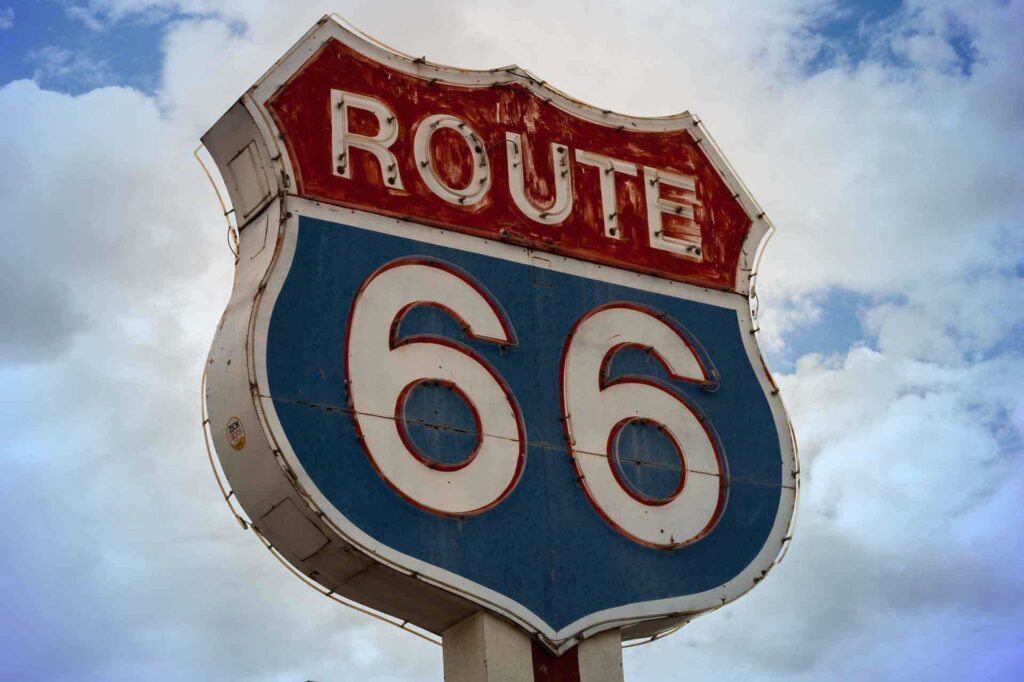
Route 66 turns 100 this year. Cue the confetti. For a century, the Mother Road has shepherded tourists and truckers from Chicago to Santa Monica, California. Smack dab in the middle of all that is little old Oklahoma.
If you haven’t noticed, Oklahoma has been quietly investing in the Main Street of America for years. Why is that? Buckle up, because we’re going to go over it all right here.
The History of Route 66 in Oklahoma
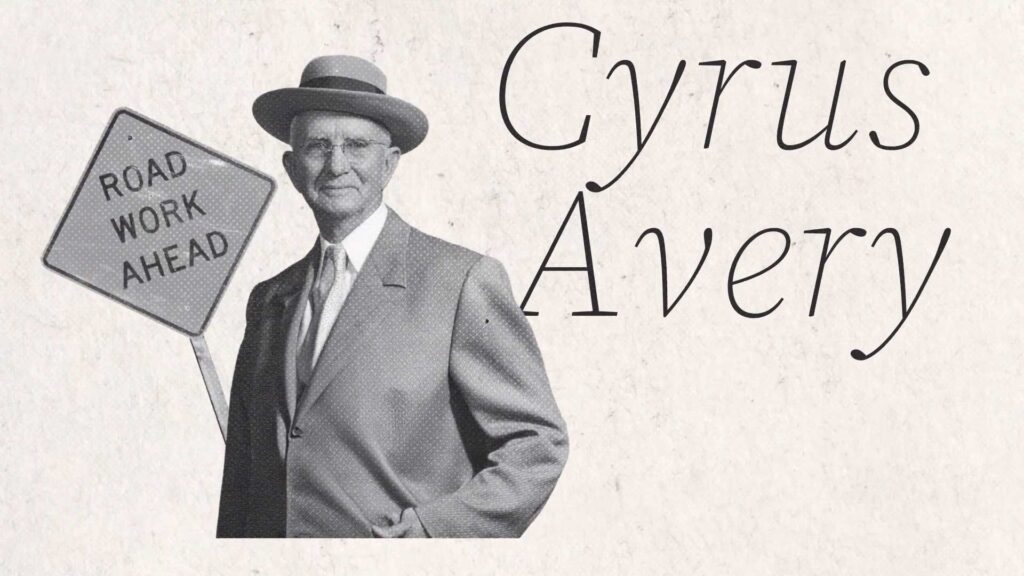
First, let’s look back at the start of Route 66 with Cyrus Avery, Oklahoma’s first highway commissioner and Tulsa businessman, basically the Beyonce of public infrastructure. In 1926 while the US was arguing over what a national highway system should look like, Avery stepped in and pushed for a Chicago-to-LA route. He even helped come up with the number “66” for the new highway. For that reason, he’s known as the father of Route 66, and what a beautiful baby he fathered.
When the road opened, it was a hit. Travelers, cash, and a metric boatload of neon poured into small towns. In turn, communities blossomed around the Mother Road.
Then, America did what America does: built bigger highways, faster routes, and shinier ways to skip the parts of the country with the best pie. Traffic dwindled, and once-technicolor towns faded. Sure, Route 66 still existed, but not in the former glory that it once knew.
The Gift of Revitalization
So, why revive Route 66 now? Well, think of it as a 100th-birthday present from the state of Oklahoma to itself. The longest driveable stretch of the Mother Road runs straight through Oklahoma, with over 400 miles of the road running through the state. Because of that, the state realized something big. If you reinvest in the magic of those 400 miles, you reignite the towns that make Oklahoma Oklahoma in the first place.
Enter Project 66.
Launched by the Oklahoma Department of Commerce and the Oklahoma Route 66 Commission, Project 66 is funding a statewide reimagining of the Route 66 experience in Oklahoma.
The grant was created by Oklahoma legislators to preserve and revitalize the route. And it goes way deeper than cute photo ops, even though there’s no shortage of those either.
It opened the door to millions in state grants for public art, parks, revitalized main streets and historic sites, restored diners, splash pads, neon signs. The whole buffet.
Giving Oklahoma Towns an Identity
All that investment helps the towns along the route establish something they might be missing: identity.
Identity literally keeps towns alive. Because a town without an identity is just a place you carefully drive through at 35 so the speed trap doesn’t get you. But one with an identity becomes a destination, a whole personality that people attach themselves to with feels and dollar bills.
It turns curiosity into foot traffic, and foot traffic into spending. That spending turns into family businesses, ballfields full of kids, parks with working fountains, and schools with funding that doesn’t just come from a bake sale.
Identity literally keeps towns alive.
So when Oklahoma invests in Route 66, it’s not just giving out of town tourists a new place to take selfies. It gives small towns something most never get: a chance to reinvent themselves, and a budget to actually do it.
And when you look around at some of these small towns, the proof of progress is in the neon-shaded pudding.
Livening Up Luther
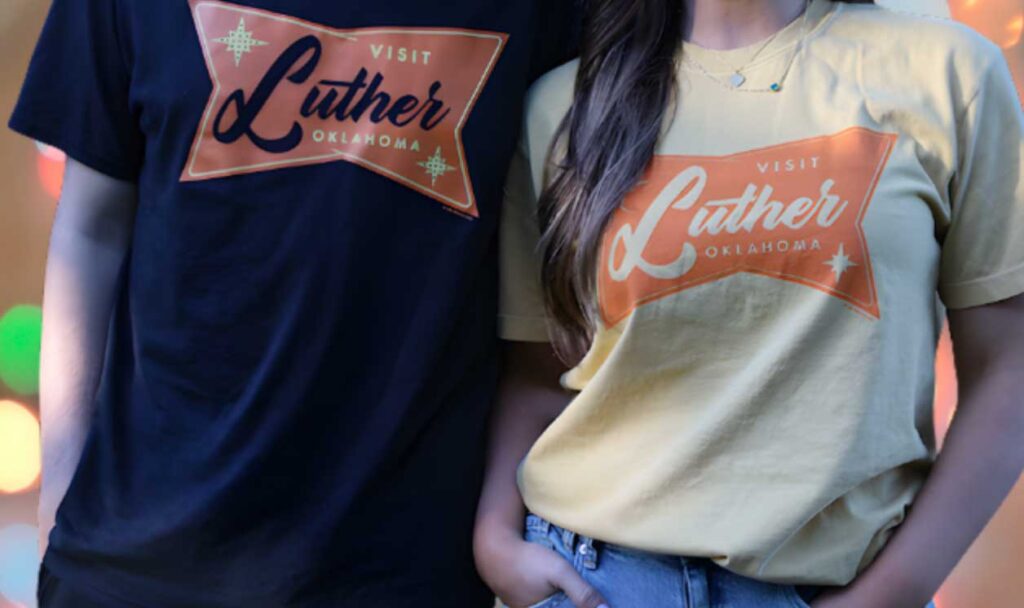
With the help of the grants, Luther, Oklahoma installed a giant illuminated sign at their historic pecan orchard. And suddenly, the whole town had a logo. The sign started showing up on t-shirts, stickers, and probably someone’s garage fridge magnet collection.
They’re also revising the historic Threatt Filling Station, one of the few surviving Black-owned businesses on Route 66. It’s more than just preservation, it’s Luther keeping a nationally important story alive and turning into revenue the community controls.
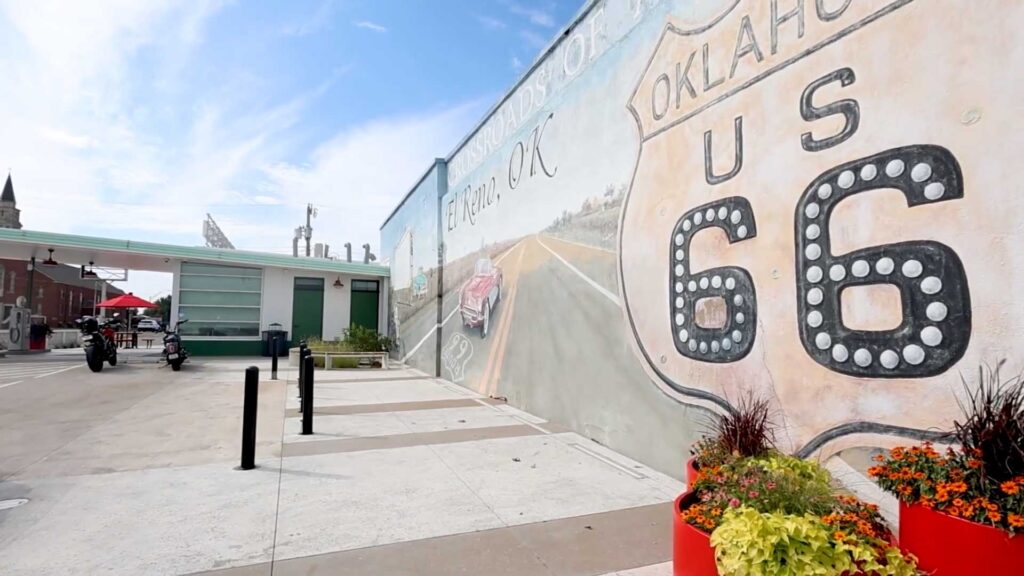
Elevating El Reno
Meanwhile, El Reno took its grant and pulled a Jerry Seinfeld by going all in on retro cars. They’re turning a historic filling station into a visitor center with a rotating classic car museum.
And the location is strategic. Travelers can park and walk to Mother Road Plaza, where they can get onion burgers and shop in downtown El Reno.
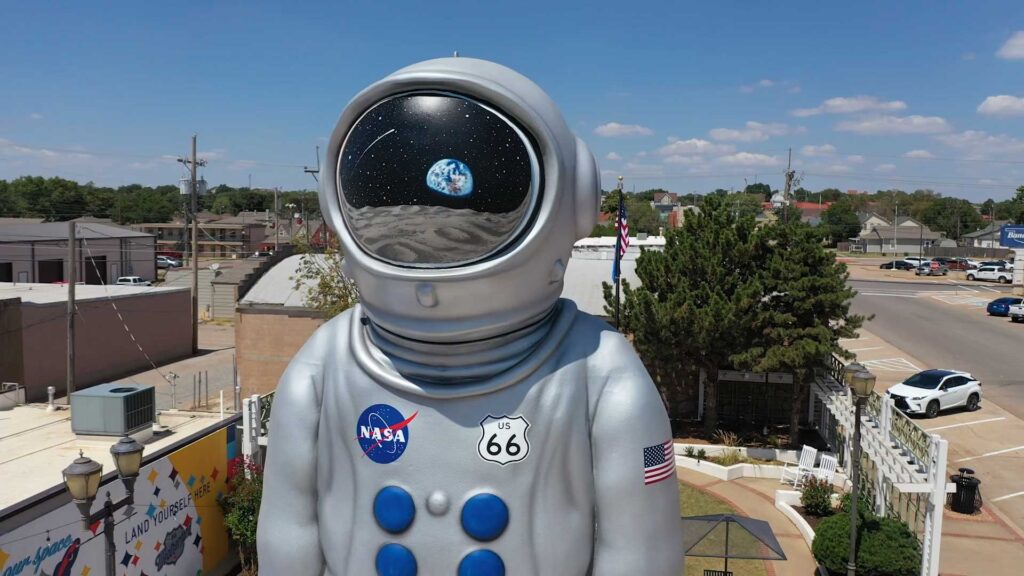
Waking Up Weatherford
In Weatherford, they said, “Subtletly? Absolutely not.” They’re investing in a full Space City identity package, complete with new welcome signs, directional markers, and a giant muffler-man style Space Cowboy honoring astronaut Thomas P. Stafford. With that kind of bet, Weatherford is no longer just “somewhere between Oklahoma City and Elk City.” It’s Space Cowboy Country.
Stroud as More than a Stopover
Elsewhere, Stroud is going all in on neon. With their grant, they’ll turn their main street into a small-town Vegas – minus the questionable decisions or literally anything else about Vegas besides the neon – with 49 businesses getting actual neon signs. To many Oklahomans, Stroud was just a place you get on the turnpike. Soon though, it’ll be a legit nighttime destination.
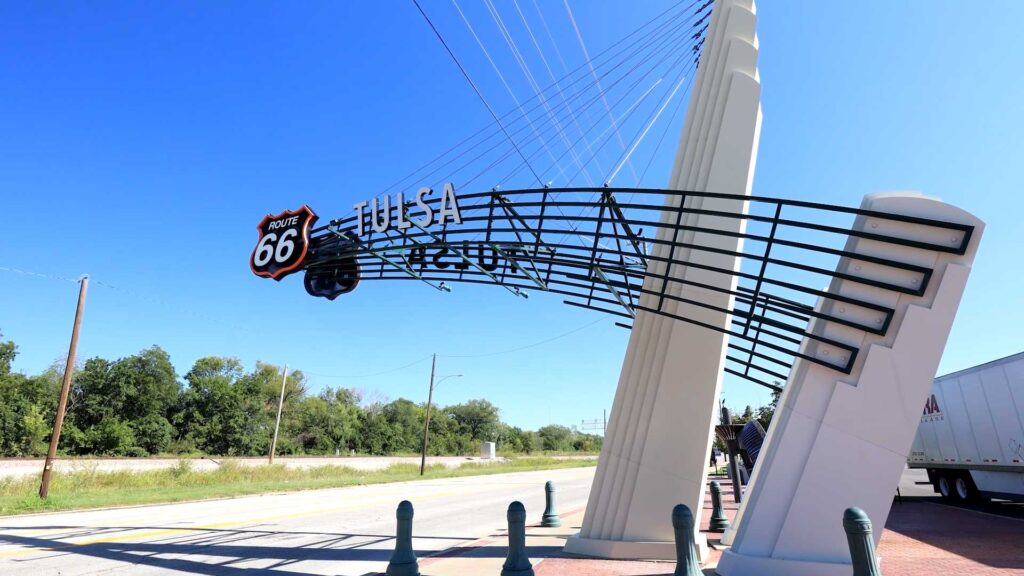
Bigger Cities Reap the Rewards Too
The bigger cities on the route are also getting in on the action. In Tulsa – the capital of Route 66 – they’re installing a 66-foot dinosaur in Howard Park and ten smaller prehistoric creatures along a 4.5-mile long stretch.
Edmond has also been awarded grant money for a 36-foot climbable “Eagle’s Nest” towering over their soon-to-open Uncommon Ground Sculpture Park.
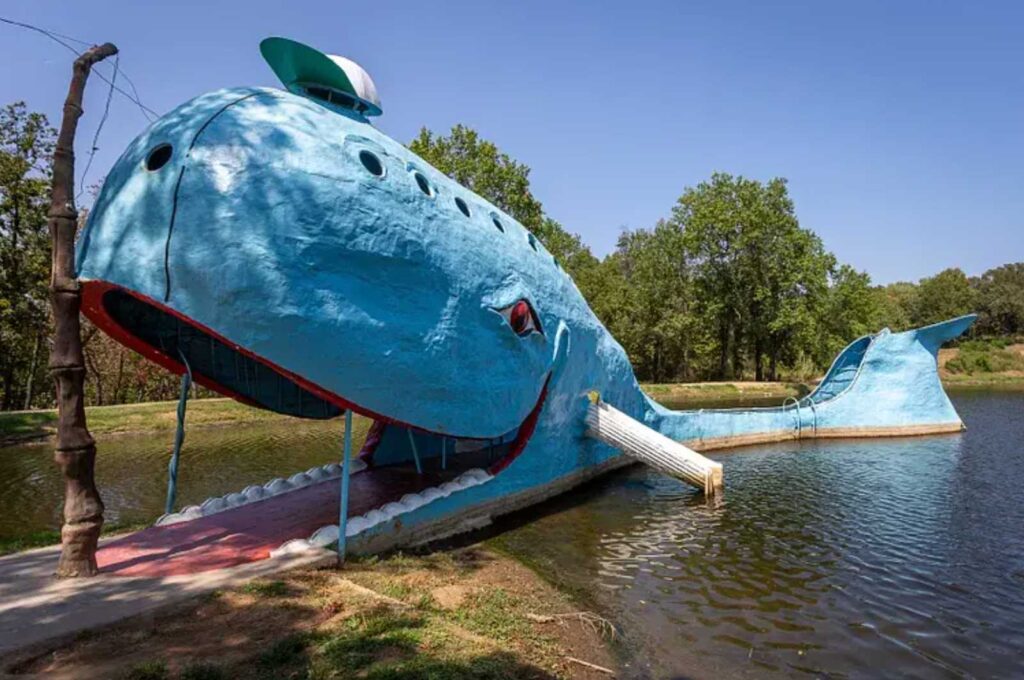
Blue Whale Benefits
Now, we can’t talk about Route 66 in Oklahoma without mentioning the Blue Whale. Catoosa’s giving their beloved concrete cetacean a nearly $2 million upgrade, with a new visitor center, fresh paint, and better parking. Turning what used to be a five-minute stop into a true destination for tourists and locals on their lunch breaks. It also cements Catoosa’s port town identity with the most recognizable whale of any landlocked state.
Continued Growth Across Oklahoma
That’s just eight of the 40-plus grants that have been awarded so far. It’s about more than cosplaying as your grandparents in their heyday. It’s about opportunity. A better Route 66 isn’t just better for tourists, it’s better for the state of Oklahoma.
More visitors equals more mom and pop shops, motel stays, and sales tax. And sales tax equals better schools, safer cities, and potholes that don’t eat your car whole.
Revitalization revitalizes people. It gives towns a reason and the resources to grow again. So it’s not just about kitsch, it’s an economic strategy.
The Mother Road is still kickin’. And Oklahoma is shaping her next hundred years in real time, one town at a time.